Understanding Low Back Pain
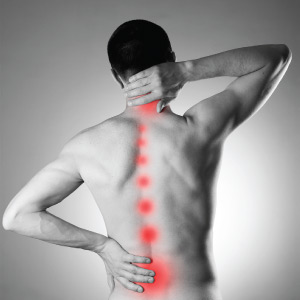
Lower back pain varies in it's presentation depending on the cause. From tight muscles to strained muscles (yes, there's a difference!), joint restrictions and trapped nerves, each condition presents differently.
Osteopaths are trained to not only treat the symptoms but focus on the cause of the condition. That means taking our time to physically examine and test the different structures around the painful area, including the hip, pelvis and leg muscles in order to ascertain and address the origin of your ailment.
Does this sound like your back?
- Stiffness when waking up in the morning
- Pain on movement, perhaps sharp or an ache, either in one specific area or a wider region
- Moving awkwardly
- Stiffness when trying to touch toes
- Muscle spasms
- Pain that exacerbates after sitting or standing for a long time
- Associated hip and leg pain that originates from the lower back
What are the causes of lower back pain?
Lifestyle
We lead increasingly stressful lifestyles owing to work pressures, often too sedentary or too physical.
Repetitive movements like lifting and turning when in a physical role places extra pressure on the spine.
Computer usage, especially when working from home, can cause the muscles around the pelvis to shorten which directly affects how the lower back behaves, causing tightening around the lower back muscles
Sports
As lovely as it feels to take part in your favourite sporting activity, especially when competitively, the extra pressure can really get to you physically.
- Repetitive rotation like golf is inherently assymetrical, overloading one side of the lower back muscles.
- Similar to golf, paddle sports like tennis, badminton and paddle also involve strong rotation movements which can send the lower back into spasm.
- Short sprints and turning when playing football can shorten the hamstrings which places extra strain on the lower back too.
Age
As we get older, the structures in our lower back naturally age with wear and tear.
Aging structures that can cause lower back pain include the intervertebral discs, the cartilage in the facet joints and ligaments that stretch with prolonged use.
As a patient-led clinic we quite often notice that older patients looking to maintain their active lifestyle tend to choose to book in on a monthly or bimonthly basis to continue gardening, golf or going on long walks, as they find it helps to prevent acute lower back pain episodes.
How can Osteopathy, Sports Therapy and Massage help?
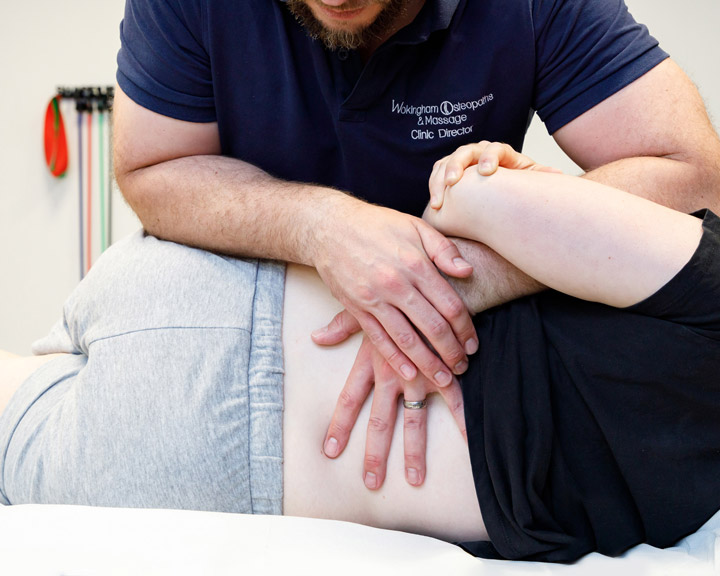
Our team of osteopaths and sports therapists are able to build a complete picture of your issue from a case history and physical examination, give a diagnosis and treatment plan.
As a healthcare clinic we are trained to take our time for maximum effectiveness, working through the musculature around the area in order to help release any problematic areas.
We use a combination of massage, joint articulation, stretching and often manipulation (if clinically justified) in order to restore function to the problematic area. We frequently dispense exercises, stretches and lifestyle advice as homework to address any maintaining factors to keep you healthier for longer.